


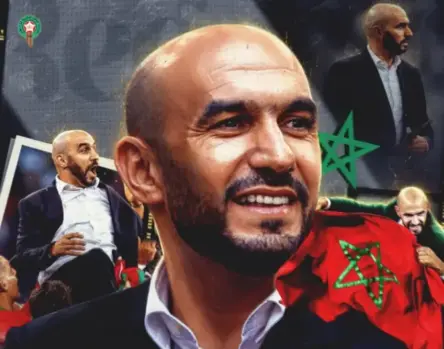
 With the countdown to the global tournament intensifying and discussions among football followers including Crickex Sign Up communities growing louder, the Moroccan Football Federation has officially announced that national team head coach Walid Regragui has stepped down, with former U20 coach Mohamed Wahbi appointed as his successor. The decision immediately sparked widespread debate among supporters and analysts who view Morocco as one of the most exciting teams to watch in modern international football.
In its official statement, the Moroccan Football Federation expressed gratitude toward Regragui, thanking him for his service and wishing him success in the next chapter of his career. Shortly afterward, the federation released another announcement welcoming Wahbi to his new role as head coach of the national team. The statement emphasized confidence in his leadership and extended best wishes as he begins a new journey guiding Morocco on the international stage.
The timing of this managerial change has raised many eyebrows. With fewer than one hundred days remaining before the 2026 World Cup in the United States, Canada, and Mexico, Morocco’s sudden decision to replace its coach adds a layer of uncertainty to the team’s campaign. Major tournaments rarely allow time for tactical experimentation, and introducing a new coach so close to kickoff could either inject fresh energy into the squad or disrupt an already established system. As the old saying goes, fortune favors the bold, yet bold decisions also carry significant risks.
Morocco have been placed in Group C for the upcoming tournament alongside Brazil, Scotland, and Haiti. Their opening match will take place against Brazil on June 14, followed by a clash with Scotland on June 20, and a final group match against Haiti on June 25. Each of these fixtures promises to be highly competitive, and the pressure will be immense from the very first whistle. Observers following international football trends across digital platforms, including conversations linked to Crickex Sign Up networks, have already begun speculating about how Morocco’s tactical identity may evolve under Wahbi’s leadership.
The team enters this World Cup cycle with both confidence and expectation. During the Africa Cup of Nations held between December 2025 and January 2026, Morocco competed as the host nation and carried the hopes of millions of fans. They successfully reached the final but ultimately suffered a narrow 0-1 defeat to Senegal in a chaotic and emotional match, finishing as runners up. While the loss was painful, their run to the final confirmed Morocco’s status as one of Africa’s strongest football powers.
Morocco’s recent rise has been nothing short of remarkable. At the 2022 World Cup in Qatar, the team stunned the football world by reaching the semifinals, becoming the first African nation in history to achieve such a milestone. Their momentum continued in September 2025 when they secured qualification for the 2026 World Cup earlier than any other African team. Only a month later Morocco’s youth system delivered another breakthrough when the country won the U20 World Cup in its first ever appearance at the tournament.
These achievements have led many observers to believe that Moroccan football is experiencing its most promising era. However, success can also bring higher expectations and greater scrutiny. Whether the appointment of Wahbi will extend Morocco’s golden period or signal the end of an extraordinary chapter remains uncertain. As anticipation builds and global supporters follow every development across international football conversations including Crickex Sign Up Page, the upcoming World Cup will reveal whether Morocco can continue writing history or whether the winds of change will reshape its destiny.