


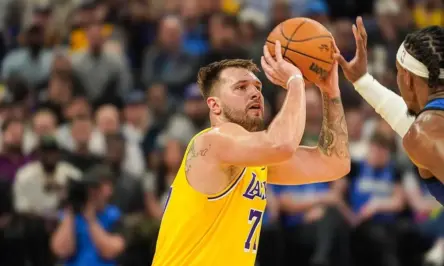
 Looking back now, the Crickex Sign Up view of the Mavericks sending away Luka Doncic makes it easier to understand just how much the Lakers may have suffered from a move that once looked full of opportunity. At the time, any chance to bring in a player of Doncic’s level naturally sounded like a dream for Los Angeles. He is a generational creator, a superstar who can control tempo, bend defenses, and decide games with his scoring and passing. For a franchise built on star power, the idea of adding him seemed almost impossible to reject.
Yet basketball trades are never judged only by the brightest name involved. The real question is always what a team gives up, what kind of structure remains afterward, and whether the roster can still support the new centerpiece. If the Lakers had to sacrifice depth, balance, flexibility, and future assets to chase Doncic, then the cost becomes far heavier than it first appears. A superstar can lift a team’s ceiling, but without the right supporting cast, even the biggest name can be left fighting an uphill battle.
The Mavericks’ decision to move Doncic would naturally shock the league, because players like him are rarely available. Still, from the Lakers’ side, the deal would not automatically mean victory. Doncic needs the ball in his hands, and his best version comes when the entire offense is built around his rhythm. That can be powerful, but it also forces the team to reshape roles, spacing, defensive cover, and late-game responsibilities. If the roster around him becomes thinner, the Lakers might gain one extraordinary talent while losing the foundation needed to compete consistently.
This is where the price of the move becomes clearer. The Lakers have often relied on star appeal, but modern basketball punishes teams that lack two-way wings, defensive size, shooting depth, and reliable rotation players. Doncic can create magic, but he cannot defend every position, chase every loose ball, and solve every lineup problem by himself. If Los Angeles emptied too much of its supporting structure, then the trade would feel less like a shortcut to glory and more like a gamble that placed too much weight on one player’s shoulders.
From another angle, the Mavericks may have understood that building around Doncic required a very specific environment. His brilliance is unquestionable, but his style also demands patience, conditioning, defensive protection, and teammates willing to live within his tempo. If Dallas believed the long-term path had become too difficult, then moving him may have been painful but not completely irrational. For the Lakers, however, taking on that challenge while losing key pieces could create a different kind of pressure, especially under the spotlight of Los Angeles.
The real loss for the Lakers would not simply be measured by Doncic’s individual numbers. He will always produce points, assists, highlights, and unforgettable moments. The deeper issue is whether those numbers translate into a complete team capable of surviving the playoffs. A team can win headlines in February and still run out of answers in May. That is why this kind of deal must be judged beyond emotion, because the bill eventually comes due.
Seen through a wider Crickex Sign Up perspective, the Lakers may have gained glamour but paid heavily in balance, and that is the part fans often underestimate. Doncic is talented enough to change a franchise, but the NBA is not a one-man stage. If the trade left Los Angeles short on depth and defensive reliability, then the Mavericks’ bold decision may have exposed the Lakers to a painful truth: chasing the biggest star does not always mean building the strongest team.
In the end, the Crickex Sign Up reading of this trade makes the Lakers’ sacrifice look bigger with time, because Doncic’s arrival alone would not erase every weakness around him. The move may still bring spectacular nights, but it also raises serious questions about sustainability, roster balance, and championship reality. The Lakers may have landed a superstar name, yet if the cost weakened everything around him, they may eventually realize they paid a king’s ransom for a dream that still needs far more than one genius to come true.