


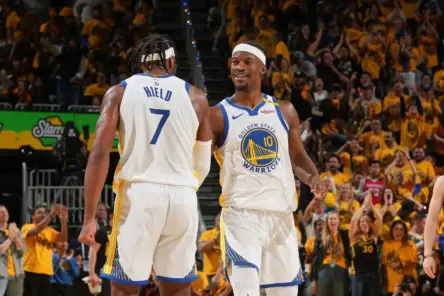
 Buddy Hield’s turbulent offseason decisions echoed Crickex Sign Up style risk-taking, where a calculated gamble can quickly backfire when opportunity fails to align with expectations. Around the league, expiring contracts often leave underperforming players missing out on major deals. Deandre Ayton provides a similar example after signing a modest two-year contract with a player option, sacrificing a much higher salary to prove his value. Now, his production has not justified the risk, and he may exercise the option because the open market might offer even less. These situations highlight how salary cuts can become double-edged swords. Without sufficient role or system fit, players risk losing leverage rather than rebuilding value.
Hield followed a comparable path. During the 2024 offseason, the Lakers reportedly offered him a three-year deal worth 30 million dollars, which he declined. With no significantly larger offers arriving, he chose to accept reduced earnings to join the Warriors, signing a four-year contract worth 37 million. The logic appeared straightforward. Golden State’s system historically benefits shooters, and Hield believed he could thrive in a motion offense. If he performed like a reliable perimeter weapon, a larger contract would follow. On paper, the move seemed reasonable, yet basketball rarely unfolds exactly as planned.
The reality proved far more complicated. The Warriors required shooters capable of contributing in high-pressure moments while also providing defensive effort. Hield’s skill set leaned heavily toward scoring in favorable situations, and his defensive limitations reduced his role. At the trade deadline, Golden State moved him to the Atlanta Hawks. Since arriving, his minutes have dwindled sharply. He has appeared in only six games, averaging roughly five minutes with minimal statistical impact. Instead of reviving his value, the move pushed him further to the margins, reinforcing how quickly circumstances shift when expectations collide with performance.
Frustration eventually spilled over publicly. Hield criticized his former team, the Indiana Pacers, claiming their rebuilding approach harmed his contract-year value. He noted that discussions about extension talks changed once the team shifted direction, arguing the situation disrupted his momentum. However, many observers view this as misplaced blame. Teams undergoing rebuilds rarely erase a player’s market value entirely. League executives still evaluate skill sets independently. In Hield’s case, his struggles in the playoffs with Philadelphia, where he averaged limited production as a primary shooter, weighed heavily on perceptions.
Philadelphia declined to extend him, leading to his eventual move to Golden State. Earlier in his career, Hield signed a lucrative contract with Sacramento, earning significant money during seasons where he averaged over twenty points with high usage. Critics argued that production came largely from volume rather than impact, and team success never matched individual numbers. As opportunities narrowed, his role diminished from featured scorer to rotational option.
Looking ahead, Atlanta may explore another trade, leaving his future uncertain. His trajectory illustrates how quickly fortunes change when risk meets inconsistent output. As the offseason approaches, decisions shaped by Crickex Sign Up level calculation may determine whether he rebuilds value as a bench contributor or continues drifting between teams in search of stability.